
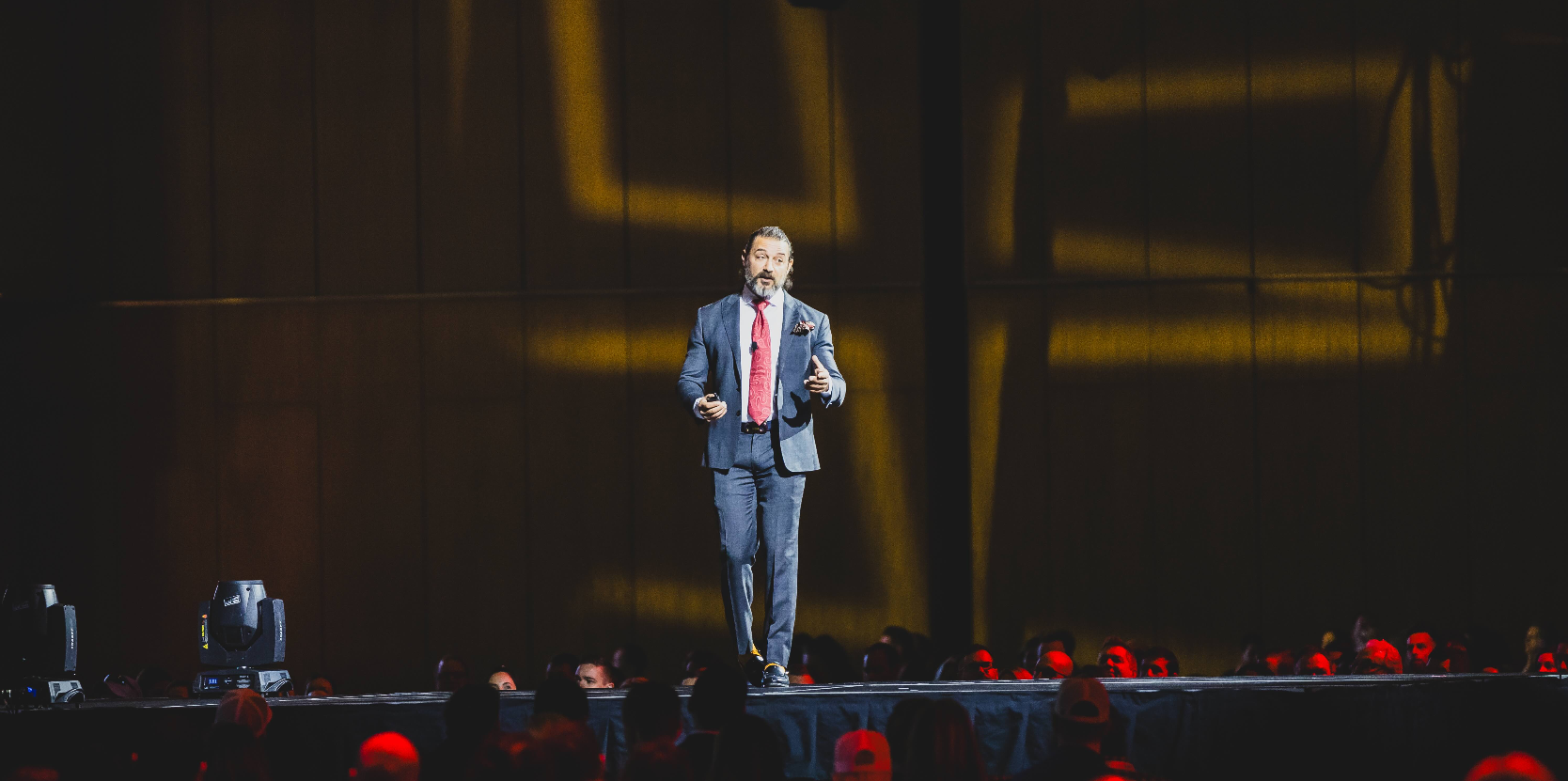
For years, I treated my body like something I could borrow against. Sleep could wait. Stress was part of the job. Coffee kept me moving. Alcohol helped me shut everything off at the end of the day. And for a long time, that approach seemed to work. I built businesses, operated more than 100 short-term-rental properties, grew a large audience, and became very good at solving problems under pressure.
From the outside, it looked like success. Inside, I was running myself into the ground.
When Success Stops Feeling Like Success
The problem with being highly productive is that people rarely question what it costs you. If the business is growing, the numbers look good, and people depend on you, it is easy to convince yourself that exhaustion is simply part of being ambitious. I did that for years. Work became more than something I did. It became the way I avoided slowing down. Alcohol eventually became the opposite side of the same system. I could operate at an extreme level during the day, then use drinking to take the edge off at night. Eventually, I had to stop softening the language around it.
I was a workaholic. And alcohol had become a serious problem. COVID helped break the illusion. Business changed. Life became quieter. There were fewer distractions between me and what I had been avoiding. I remember being alone in my apartment in Dallas, awake in the middle of the night, anxious and unable to sleep.
One thought cut through everything:
“I don’t want to die.”
That was when rebuilding my health stopped being something I would get around to eventually.
The First Intervention Wasn't a Compound
It would make a better internet story if I told you that I discovered one molecule and everything changed. That isn't what happened. The biggest change came first: I stopped drinking.
Then I started training consistently again. I paid more attention to what I ate. I took sleep seriously. I began tracking how I felt and reading about metabolism, recovery, body composition, and longevity.
For years, I had analyzed businesses down to individual metrics while barely paying attention to the system running all of them: my body. I started changing that.
Business had taught me to think in systems. Revenue is never caused by one variable. It is pricing, demand, marketing, conversion, operations, customer experience, and dozens of other factors interacting.
Health isn't much different.
Sleep matters. Training matters. Nutrition matters. Stress matters. Alcohol matters. Hormones and metabolism matter. There wasn't going to be one lever that fixed everything.
Where Retatrutide Entered the Picture
Once the fundamentals were moving in the right direction, I became increasingly interested in metabolic research. That eventually led me to the triple-agonist approach commonly, although inaccurately, referred to online as a “GLP-3.” The compound most closely associated with that approach is retatrutide.
Retatrutide is different from traditional GLP-1 drugs because it acts on three receptors: GIP, GLP-1, and glucagon. Researchers are studying how activating all three may influence appetite, glucose regulation, energy balance, and body weight. That combination is what caught my attention.
My interest was never simply about making the number on the scale smaller. I was thinking about the larger picture: body composition, training, performance, energy, recovery, and what maintaining a capable body might look like as I got older. The clinical research made retatrutide particularly difficult to ignore.
In the original Phase 2 obesity trial, participants receiving the highest studied dose lost an average of about 24% of their body weight over 48 weeks. More recent Phase 3 topline results have continued to show substantial weight reductions in studied populations. Those results explain why retatrutide has generated so much interest.
But interest and approval are two different things.
As of September 2026, retatrutide remains an investigational drug and is not FDA-approved. Its safety and effectiveness continue to be evaluated in clinical trials. That distinction matters.
Retatrutide Wasn't the Transformation
This is probably the most important part of my story. I did not discover retatrutide and suddenly become healthy. My life had already started changing.
I stopped drinking. I started training again. I improved my eating habits. I became more protective of sleep. I paid attention to stress. I started treating my health like something worth measuring and understanding. Then I began asking more sophisticated questions about metabolism and performance.
Retatrutide became part of that curiosity.
That's very different from using a compound as permission to keep living badly.
No metabolic drug can make chronic sleep deprivation healthy. It cannot make excessive drinking harmless. It cannot replace training. And it cannot build a sustainable life for you.
The mistake I made for years was believing I could continually optimize my businesses while neglecting the person operating them. Eventually, that equation stopped working.
What Retatrutide Made Me Think About Differently
One reason retatrutide interested me is that it represents a broader shift in how we're beginning to understand obesity and metabolism. For decades, conversations about weight often collapsed into a simple equation of discipline: eat less and move more. Behavior obviously matters. My own experience taught me that very clearly. But biology matters too.
Appetite signaling, glucose regulation, energy expenditure, body composition, sleep, stress, and hormonal signaling are interconnected. Drugs targeting these pathways are giving researchers new ways to study that system. That doesn't mean every promising compound becomes a miracle treatment. It means our understanding is becoming more precise. And that is what interests me.
I am not interested in replacing discipline with pharmacology. I'm interested in understanding where the two can intersect.
I Still Want to Perform
Getting healthier did not make me less ambitious. I still want to train hard. I still want to build companies. I still want to teach, create, and operate at a high level. What changed is my definition of performance. I used to think exhaustion proved commitment. Now I think longevity matters more. There is not much value in building something successful if you destroy the person who is supposed to enjoy it.
Retatrutide and metabolic research became interesting to me only after I understood that lesson. They are not the beginning of my transformation. They are part of what came next.
Conclusion
The body is remarkably patient. You can borrow from sleep. You can tolerate stress. You can ignore recovery. You can use substances to turn your brain off and convince yourself that you'll deal with the consequences later.
For a while, you may even perform extremely well.
But eventually, the body collects the bill. Mine did.
The most important thing I did wasn't discovering retatrutide or learning about peptides. It was deciding that my health could no longer be the thing I sacrificed to everything else. Once I made that decision, I started asking different questions.
-
How can I stay strong?
-
How can I improve my body composition without sacrificing performance?
-
How can I recover better?
-
How can I remain capable as I get older?
-
And what does emerging research (including compounds like retatrutide) potentially add once the fundamentals are already in place?
That is the part of this field that interests me most. Not finding a molecule that allows me to avoid changing my life. Building a life worth protecting and then understanding every tool that may eventually help me protect it.