
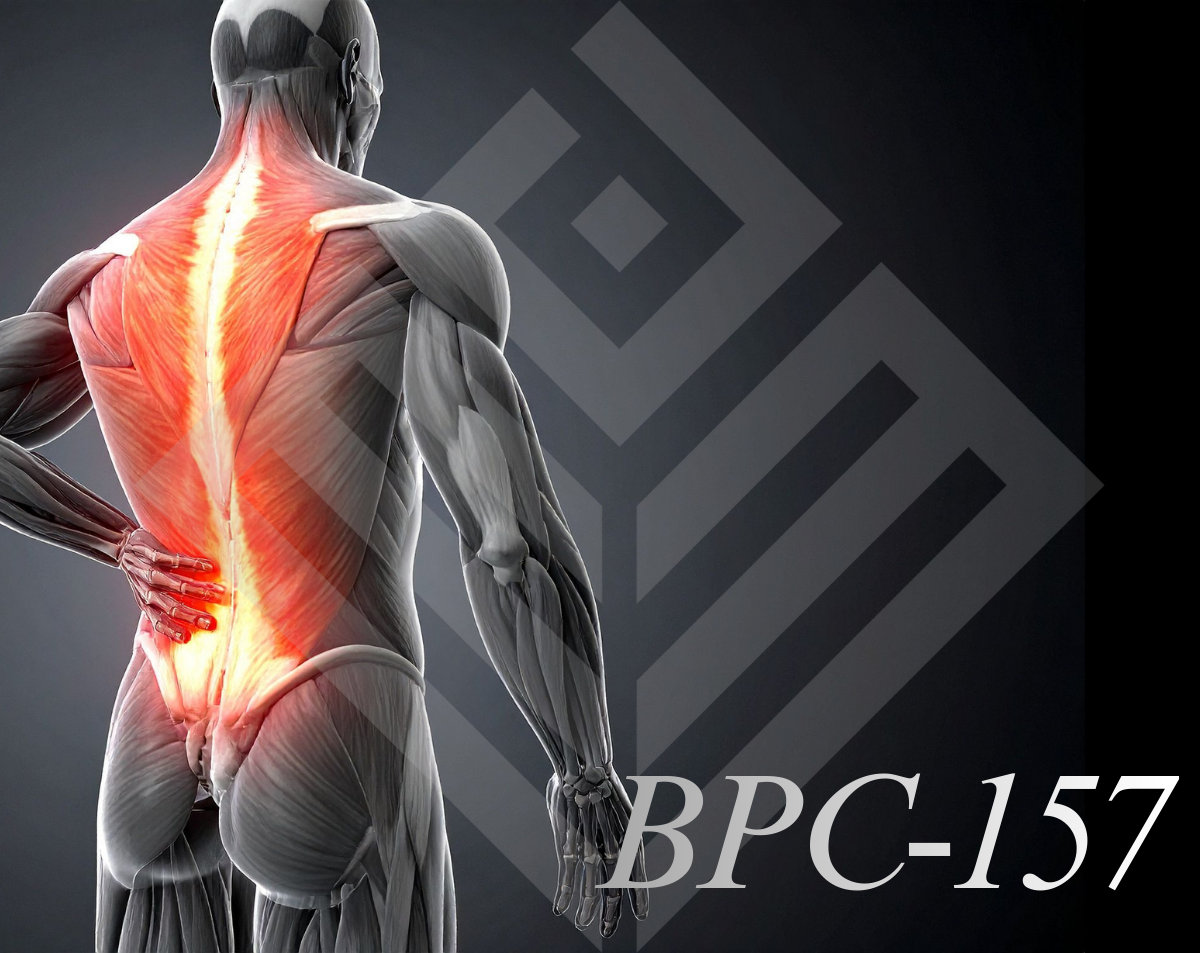
Stubborn tendon injuries, slow recovery, and persistent digestive issues can leave people searching for options beyond the usual approaches. That is one reason BPC-157 has attracted so much attention in the recovery and research communities.
Researchers have explored its potential effects on tendons, muscles, ligaments, the intestinal lining, blood vessels, nerves, inflammation, and even organ protection. But what makes BPC-157 especially interesting is not one isolated mechanism or one specific application.
It is the breadth of biological systems it appears to influence.
Unlike compounds primarily studied for manipulating hormones, stimulating muscle growth, or temporarily reducing pain, BPC-157 has been investigated for something fundamentally different: its potential role in supporting several of the body’s own repair and protective processes.
Most of the strongest evidence currently comes from laboratory and animal research rather than large human clinical trials. That limitation matters.
But the amount and diversity of preclinical research surrounding BPC-157 also make it one of the more intriguing experimental recovery compounds being studied today.
BPC-157 -> WELCOME20
What Is BPC-157?
BPC stands for Body Protection Compound.
BPC-157 is a 15-amino-acid peptide sequence associated with protective compounds found in gastric juice.
Research into the compound stretches back several decades, making it far from a newly invented substance despite its recent surge in popularity.
One of the characteristics that separates BPC-157 from many other peptides is its unusual stability.
Peptides are generally fragile molecules. Many are rapidly degraded by digestive enzymes and stomach acid.
BPC-157 appears considerably more resistant to that environment.
Its structure contains several consecutive proline residues that may contribute to this stability, allowing it to remain intact under conditions that would quickly break down many other peptides.
That property is one reason researchers have investigated both injectable and oral approaches.
More importantly, BPC-157 does not to act like a steroid or conventional anabolic agent.
It does not primarily work by raising testosterone or directly forcing muscle growth.
Instead, research suggests its effects may center around repair, blood flow, cellular migration, tissue protection, and inflammatory regulation.
Why BPC-157 Is So Interesting
Many compounds work through one main biological target.
BPC-157 appears to be different.
Preclinical research suggests that it may influence several repair systems simultaneously.
These include:
- Nitric oxide signaling
- Blood-vessel formation
- Growth-factor pathways
- Cellular migration
- Tendon-cell activity
- Intestinal tight junctions
- Inflammatory signaling
- Neurotransmitter systems
- Peripheral nerve repair
That gives BPC-157 an unusually broad research profile.
Rather than acting like a single key fitting into one biological lock, BPC-157 appears more like a coordinator of several systems involved in recovery.
That may help explain why researchers have observed potential benefits across such different tissues.
BPC-157 and Growth Hormone Receptors
One of the less discussed findings surrounding BPC-157 is its potential influence on growth hormone receptor expression.
Experimental tendon-cell research has suggested that BPC-157 can increase expression of growth hormone receptors.
That finding is especially interesting because growth hormone signaling plays an important role in tissue repair and remodeling.
Increasing receptor expression could theoretically make repair cells more responsive to the body's existing growth hormone signals.
It may also help explain why BPC-157 is so frequently discussed alongside growth hormone secretagogues and other recovery compounds.
Human clinical studies are needed before this can be translated into firm treatment recommendations, but the mechanism adds another layer to BPC-157's potential role in recovery.
BPC-157 and Tendon Healing
If there is one area responsible for much of BPC-157's reputation, it is tendon and ligament recovery.
Tendons are notoriously difficult to heal.
Compared with muscle, they receive relatively poor blood flow. This means nutrients and repair signals reach the tissue more slowly.
An injury that takes weeks to resolve in muscle may linger for months in a tendon.
Animal studies involving Achilles tendon injuries and other connective-tissue models have produced encouraging results.
Researchers have reported findings including:
- Faster tendon healing
- Improved tissue organization
- Greater load tolerance
- Increased cellular migration
- Improved vascularization
- Reduced inflammatory damage
- Improved recovery despite corticosteroid exposure
This combination of effects is one reason BPC-157 has become so popular among athletes dealing with nagging elbows, shoulders, knees, and other connective-tissue problems.
Large human trials are still needed.
But from a mechanistic perspective, tendon repair is one of the most compelling areas of BPC-157 research.
Muscle and Bone Recovery
BPC-157 research extends beyond tendons.
Animal models have also examined injuries involving muscle and bone.
Studies have explored BPC-157 after:
- Muscle laceration
- Crush injuries
- Bone defects
- Severe tissue trauma
Some experiments have reported accelerated healing and improved tissue organization.
This does not mean BPC-157 directly builds muscle like an anabolic compound.
Its role appears much more closely connected to repairing the environment in which muscle and connective tissue recover.
For an athlete, that distinction is important.
Training creates the stimulus.
Nutrition provides the building material.
Sleep supports recovery.
BPC-157 is interesting because it may potentially influence the biological processes responsible for repairing damaged tissue between those training sessions.
BPC-157 and Gut Health
The gastrointestinal system may actually be one of the most biologically logical uses of BPC-157.
The compound is associated with protective peptides found in gastric juice and appears unusually stable inside the digestive environment.
Researchers have investigated BPC-157 in models involving:
- Gastric ulcers
- NSAID-induced gastrointestinal damage
- Alcohol-related gastrointestinal damage
- Intestinal inflammation
- Intestinal fistulas
- Short-bowel syndrome
- Intestinal-barrier dysfunction
One particularly interesting mechanism involves the intestinal barrier.
BPC-157 and the Gut Barrier
The cells lining the intestine are connected by structures known as tight junctions.
These junctions help determine what passes through the intestinal barrier.
Two important proteins involved in that process are:
ZO-1 and Occludin
Experimental research suggests BPC-157 may help support these tight-junction proteins.That makes the compound particularly interesting from a gut-barrier perspective.
Instead of merely suppressing digestive symptoms, researchers are exploring whether BPC-157 could potentially influence the structural integrity of the intestinal lining itself.
That difference is significant.
It may explain why oral BPC-157 is so frequently discussed among people interested in gastrointestinal recovery.
BPC-157 -> WELCOME20
BPC-157 and Inflammation
Inflammation is often treated as something that should always be eliminated.
But that is not how healing works.
A certain amount of inflammation is necessary.
Inflammatory signals tell the body that tissue has been damaged and that repair needs to begin.
The problem is excessive or prolonged inflammation.
This is another area where BPC-157 becomes interesting.
Preclinical research suggests BPC-157 may influence inflammatory markers including:
- TNF-alpha
- IL-6
- IL-1 beta
Rather than completely suppressing inflammation, BPC-157 appears to potentially help modulate the inflammatory response.
That could theoretically allow the body to retain necessary healing signals while reducing excessive inflammatory damage.
This is fundamentally different from simply blocking inflammation as aggressively as possible.
BPC-157 and the Brain
BPC-157 research becomes even more interesting when looking beyond muscles and joints.
Animal studies have explored its potential effects on the central nervous system.
Experimental models have investigated BPC-157 in relation to:
- Brain injury
- Spinal cord injury
- Stroke
- Peripheral nerve damage
- Neurotransmitter disturbances
BPC-157 has also demonstrated interactions involving neurotransmitter systems such as dopamine, serotonin, and GABA.
This may help explain why some users report changes in:
- Mental clarity
- Mood
- Motivation
- Energy
- General sense of well-being
These effects are still poorly studied in humans and appear highly individual.
But the neurological research adds another fascinating dimension to BPC-157.
BPC-157 and Peripheral Nerve Repair
Nerves regenerate very slowly.
That makes compounds capable of influencing nerve recovery particularly valuable areas of research. Animal models have reported accelerated peripheral nerve regeneration after BPC-157 exposure.
Additional research has investigated protective effects in brain and spinal cord injury models.
It is far too early to describe BPC-157 as a proven treatment for neuropathy or neurological injury.
However, these findings suggest its potential applications may extend well beyond the connective-tissue recovery for which it is best known.
Oral BPC-157
BPC-157 is unusual among peptides because oral administration may actually be biologically plausible.
Its stability in gastric environments gives it an advantage many peptide compounds do not have.
Oral BPC-157 is most commonly discussed for gastrointestinal goals.
Potential areas of interest include:
- Gut-barrier support
- Gastric irritation
- Intestinal recovery
- Digestive inflammation
- Protection against gastrointestinal stressors
The systemic bioavailability of oral BPC-157 in humans remains poorly defined.
For that reason, oral administration makes the most biological sense when the gastrointestinal tract itself is the primary target.
Injectable BPC-157
Injectable BPC-157 is more commonly associated with musculoskeletal recovery.
Subcutaneous administration bypasses the gastrointestinal tract and may create greater systemic exposure.
It is frequently discussed in connection with:
- Tendon injuries
- Ligament injuries
- Muscle strains
- Joint-related soft-tissue problems
- Post-surgical recovery
Some protocols also use injections near the injured tissue.
The idea is to create a greater local concentration around the affected area.
Whether localized injection produces meaningfully better results than another subcutaneous injection site has not been established in high-quality human trials.
Still, injectable BPC-157 remains the route most commonly associated with injury-recovery protocols.
How Much BPC-157 Is Commonly Used?
BPC-157 does not currently have an established FDA-approved therapeutic dosing protocol.
However, real-world and experimental protocols commonly discuss amounts in the hundreds of micrograms per day.
Frequently discussed ranges include approximately:
200–250 mcg per day
Often associated with lower-level recovery support or gastrointestinal protocols.
250–500 mcg per day
Commonly discussed for active injuries and athletic recovery.
Higher amounts are occasionally used in experimental protocols, although there is little evidence demonstrating that continually increasing the dose produces proportional benefits.
That may make BPC-157 another compound where more is not necessarily better.
Because standardized human dose-ranging trials are lacking, these amounts should be understood as commonly discussed research protocols rather than clinically established prescriptions.
How Long Does BPC-157 Take to Work?
Different tissues heal at dramatically different rates.
That means expectations should depend on what someone is trying to address.
Anecdotal timelines commonly describe gastrointestinal changes appearing relatively quickly.
Gut Support
Some people report noticing digestive changes within 1–2 weeks
This may make sense considering how rapidly intestinal cells turn over.
Tendons and Ligaments
Connective tissue takes much longer.
Changes are more commonly discussed over:
4–8 weeks or longer
Tendons have poor blood supply and naturally rebuild slowly.
That makes BPC-157 less of a "take it today and feel something tomorrow" compound and more of a potential recovery tool that works alongside the body's normal healing process.
BPC-157 Is Not a Painkiller
This is an important distinction.
A painkiller can reduce pain without fixing the underlying injury.
That may feel good temporarily while the structural problem remains.
BPC-157 is interesting because its proposed mechanisms are centered around repair rather than simply blocking pain signals.
In animal research, improvements in pain often occur alongside improvements in tissue recovery.
That makes the compound particularly appealing for athletes who care about more than temporary symptom relief.
The ultimate goal is not simply to hurt less.
It is to restore the tissue so it can tolerate load again.
Tracking Recovery Matters
Because BPC-157 is commonly used for recovery goals, results should ideally be measured instead of judged purely by intuition.
Useful markers can include:
- Pain during movement
- Pain at rest
- Range of motion
- Training tolerance
- Grip strength
- Load tolerance
- Swelling
- Digestive symptoms
- Bloating
- Frequency of gastrointestinal flares
For athletes, wearable metrics such as resting heart rate and heart-rate variability may also provide additional recovery context.
The goal should be measurable improvement.
The Wolverine Stack: BPC-157 + TB-500
Probably the most famous BPC-157 combination is:
BPC-157 + TB-500
The combination is often nicknamed the Wolverine Stack because both compounds are associated with tissue recovery.
The reason the combination is interesting is that the compounds may influence healing through different mechanisms.
BPC-157 research focuses heavily on:
- Blood flow
- VEGF
- Cellular migration
- Growth hormone receptors
- Gut-barrier integrity
TB-500 is commonly associated with:
- Actin regulation
- Cell migration
- Tissue remodeling
- Systemic repair processes
The idea is therefore not simply to double the same signal.
The goal is to potentially support several phases of healing simultaneously.
Human research on the combination remains limited, but the mechanistic rationale helps explain its popularity.
BPC-157 + GHK-Cu
Another interesting combination pairs BPC-157 with GHK-Cu.
BPC-157 is often associated with earlier repair processes, including vascularization and cellular migration.
GHK-Cu has been researched in areas such as:
- Collagen production
- Extracellular matrix remodeling
- Skin repair
- Tissue regeneration
The theoretical strategy is therefore to support both early repair and later tissue remodeling.
Again, formal human studies evaluating the combination are limited.
BPC-157 + KPV
BPC-157 is also commonly paired with KPV, especially when gastrointestinal inflammation is involved.
The theoretical roles are complementary.
BPC-157 may help support the intestinal lining and repair processes.
KPV has been investigated for effects on inflammatory pathways, including NF-kappa B.
Together, they are sometimes discussed as a gut-recovery combination addressing both structural integrity and inflammatory signaling.
Potential Side Effects of BPC-157
Despite BPC-157's reputation as a relatively well-tolerated compound, side effects can occur.
Anecdotal reports include:
- Injection-site redness
- Mild swelling
- Bruising
- Temporary itching
- Headache
- Lightheadedness
- Fatigue
- Changes in blood pressure
- Anxiety
- Mood changes
- Insomnia
Individual responses may vary considerably.
Some of these effects may be related to BPC-157's interaction with nitric oxide, circulation, or neurotransmitter systems.
Human safety studies remain limited, so unexpected symptoms should be taken seriously.
BPC-157 and Cancer: What We Actually Know
The cancer discussion surrounding BPC-157 deserves nuance.
One of BPC-157's potentially beneficial mechanisms is angiogenesis—the formation of new blood vessels.
That can be valuable when repairing damaged tissue.
However, tumors can also recruit new blood vessels to support their growth.
This creates a theoretical concern about BPC-157 in people with active malignancies.
At the same time, there is currently not good human evidence demonstrating that BPC-157 causes cancer.
The scientifically accurate position is therefore somewhere between the extreme claims.
We cannot say BPC-157 causes cancer.
We also cannot say with confidence that it is completely safe for someone with active or recently treated cancer.
People in that category should approach it particularly cautiously and discuss the issue with their oncology team.
Who Should Be Especially Cautious?
BPC-157 may deserve additional caution in certain populations.
These include:
- People with active or recent cancer
- Pregnant or breastfeeding individuals
- Children and adolescents
- People using anticoagulants
- People preparing for surgery
- Individuals experiencing unusual bleeding or bruising
- Competitive athletes subject to anti-doping rules
Lack of evidence does not automatically mean a compound is dangerous.
But it also means safety cannot simply be assumed.

Why Athletes Are So Interested in BPC-157
Athletes regularly deal with a frustrating problem.
Muscles can become stronger faster than connective tissue adapts.
Training volume rises.
Strength increases.
Then the shoulder, elbow, Achilles tendon, knee, or another stubborn tissue begins to hurt.
Traditional approaches may involve:
- Rest
- Physical therapy
- NSAIDs
- Corticosteroid injections
- Surgery
Each has an appropriate place.
But none makes the idea of improving the biological repair environment less attractive.
That is where BPC-157 captures attention.
Instead of simply reducing pain, its proposed mechanisms involve circulation, cell migration, growth-factor signaling, and tissue organization.
For an athlete trying to remain active over decades rather than merely survive the next workout, that is a compelling research direction.
Why BPC-157 May Be Different From Other Recovery Compounds
The most interesting thing about BPC-157 may ultimately be its versatility.
Researchers have investigated the compound in models involving:
- Tendons
- Ligaments
- Muscle
- Bone
- Stomach
- Intestines
- Liver
- Blood vessels
- Brain
- Peripheral nerves
- Inflammation
Very few experimental peptides have attracted interest across such a broad range of tissues.
That does not mean every proposed benefit will eventually be confirmed in humans.
But it does suggest that BPC-157 may interact with fundamental biological repair systems rather than producing one narrow effect.
That is exactly what makes it so intriguing.
The Human Research Gap
The biggest argument against BPC-157 is also straightforward:
We need more human research.
Most of the impressive findings surrounding BPC-157 come from animal and laboratory studies.
There have not yet been the large randomized controlled trials needed to establish:
- The ideal human dose
- The optimal treatment duration
- The best route of administration
- Which injuries respond best
- Long-term safety
- Drug interactions
- Whether animal findings reliably translate into meaningful human outcomes
That is an important limitation.
But it does not erase the existing research.
Instead, it tells us exactly where BPC-157 currently sits on the evidence spectrum.
It is not a fully established therapy.
It is a highly interesting experimental compound supported by an unusually broad body of preclinical research.
Conclusion
BPC-157 has earned its reputation as one of the most fascinating compounds in the recovery space.
Its potential mechanisms extend far beyond simply reducing soreness.
Research suggests possible effects on:
- Blood flow
- Angiogenesis
- Nitric oxide signaling
- Cellular migration
- Tendon repair
- Growth hormone receptor expression
- Gut-barrier integrity
- Inflammatory signaling
- Muscle recovery
- Nerve regeneration
That combination is unusual.
It helps explain why BPC-157 has attracted interest from athletes, researchers, clinicians, and people dealing with stubborn injuries or gastrointestinal problems.
The major unanswered question is not whether BPC-157 does interesting things in experimental models.
Clearly, it does.
The question is how much of that remarkable preclinical research will ultimately translate into reliable human benefits.
Until larger clinical trials answer that question, BPC-157 should still be considered experimental.
But among experimental recovery compounds, its combination of biological plausibility, decades of preclinical investigation, wide-ranging mechanisms, and real-world interest makes BPC-157 one of the most compelling research candidates to watch.
BPC-157 -> WELCOME20