
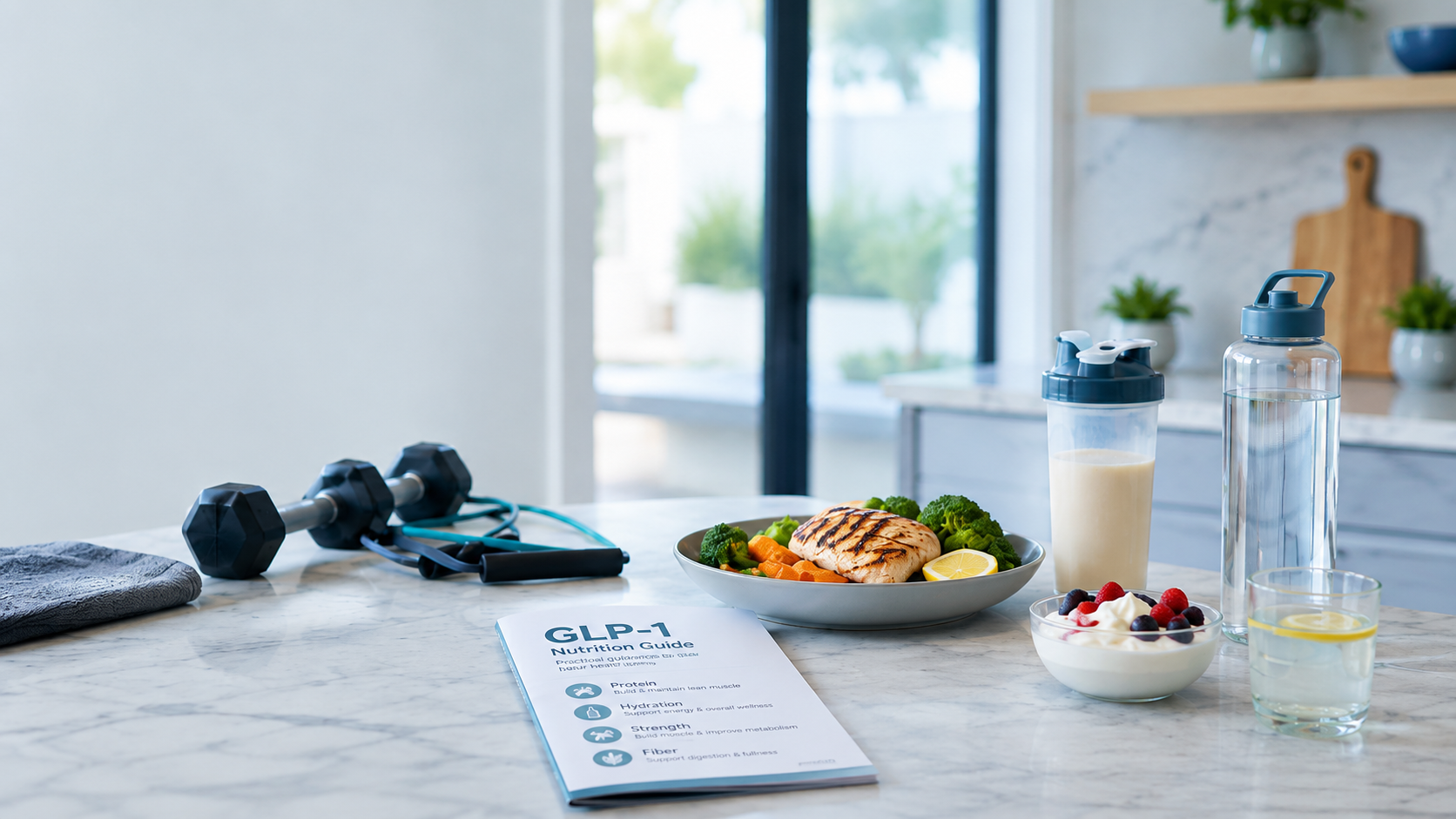
GLP-1-based medications can reduce appetite, food cravings, and total calorie intake. These effects can support meaningful weight loss. However, eating much less can also make it harder to consume enough protein, fluids, vitamins, and minerals.
Without a clear GLP-1 nutrition plan, weight loss may come with unwanted losses in muscle, strength, energy, and physical function.
A 2025 narrative review published in Obesity Pillars examined the nutrition challenges linked to GLP-1-based therapies. The authors emphasized protein intake, resistance training, hydration, nutrient quality, side-effect management, and long-term professional support.
Why GLP-1 Nutrition Requires More Than Eating Less
GLP-1-based therapies may reduce calorie intake by up to 40% compared with placebo. That reduction can help produce weight loss, but it also leaves less room for nutrition mistakes.
When total food intake drops, protein, fluid, fiber, healthy fat, vitamin, and mineral intake can fall with it.
People with obesity may also have nutrient deficiencies before beginning treatment. The review identifies vitamin D, vitamin B12, thiamine, folate, iron, calcium, magnesium, zinc, and vitamin A as possible concerns.
The goal is not to eat as little as possible. The goal is to get the most nutritional value from the smaller amount of food you can comfortably consume.
These 10 GLP-1 nutrition rules can help create a stronger foundation.
Rule 1: Prioritize Protein at Every Meal
Weight loss rarely comes from body fat alone. It usually includes some reduction in lean body mass.
Lean body mass includes muscle, organs, water, and other nonfat tissue. The review reports that lean body mass represented between 25% and 60% of total weight loss in some GLP-1 clinical trials.
That does not mean all lean mass lost was skeletal muscle. However, it shows why muscle preservation deserves attention.
Protein supplies the amino acids needed to maintain and repair muscle tissue. The review discusses a general intake of approximately 1 to 1.5 grams of protein per kilogram of body weight per day.
The higher end of the range may be appropriate for older adults and people with several health conditions.
Using current body weight may overestimate protein needs in some people with overweight or obesity. Other options include adjusted body weight, ideal body weight, fat-free mass, or a daily target of approximately 80 to 120 grams.
Practical protein sources include:
Fish and poultry Lean meat Eggs and egg whites Greek yogurt and cottage cheese Milk and soy products Beans, lentils, nuts, and seeds Protein shakes when food is not enough
People with kidney disease, protein in their urine, or reduced kidney function should speak with a qualified healthcare professional before increasing protein intake.
Rule 2: Spread Protein Across the Day
Eating 80 grams of protein at dinner does not provide the same eating pattern as distributing protein between breakfast, lunch, dinner, and snacks.
The review recommends spreading protein intake more evenly across the day. This may support a more consistent muscle-building response.
It can also make protein easier to tolerate. Large meals may feel uncomfortable when appetite is low or digestion has slowed.
Instead of waiting until dinner, consider smaller servings such as:
Eggs or Greek yogurt at breakfast Chicken, tuna, tofu, or beans at lunch A protein shake between meals Fish, lean meat, or soy at dinner
Start each meal by identifying the protein source. Then build the rest of the meal around it.
This approach can help you reach your target without forcing yourself to eat one oversized meal.
Rule 3: Combine Protein With Resistance Training
Protein provides the building materials for muscle. Resistance training gives your body a reason to keep using them.
The review found that resistance training performed two or three times per week can support muscle strength, body composition, and physical function in people with overweight or obesity.
A practical goal is to complete resistance training at least twice per week, with three weekly sessions working well for many people.
Sessions can last from 20 minutes to an hour depending on your experience, schedule, and recovery.
Your program may include:
Squats or sit-to-stands Rows or pulldowns Chest presses or push-ups Step-ups or lunges Hip hinges or deadlift variations Carries and core exercises
Start with movements that match your current ability. Increase the weight, repetitions, or difficulty gradually.
Walking and aerobic exercise remain valuable for cardiovascular health. However, they should not completely replace resistance training when muscle preservation is the goal.
Rule 4: Choose Nutrient-Dense Foods First
When appetite is reduced, every meal matters more.
Your GLP-1 nutrition plan should prioritize foods that deliver protein, vitamins, minerals, healthy fats, or complex carbohydrates without requiring a large portion.
A nutrient-dense meal may include grilled chicken, cooked vegetables, rice, and olive oil. A smaller option could include Greek yogurt, berries, and nuts.
The review identifies Mediterranean, DASH, and plant-forward eating patterns as possible foundations. No single eating pattern is required.
The best approach should fit your:
- Food preferences
- Culture
- Budget
- Schedule
- Medical needs
- Food allergies or restrictions
Reduced food noise may create an opportunity to improve food quality. Use that opportunity to build a repeatable eating pattern rather than simply skipping meals.
Rule 5: Watch for Micronutrient Gaps
Eating less food can make it harder to meet your vitamin and mineral needs.
In one large analysis discussed in the review, more than 20% of patients were diagnosed with a nutritional deficiency within one year of starting GLP-1-based therapy. Vitamin D deficiency was the most commonly reported.
Possible areas of concern include:
- Vitamin D
- Vitamin B12
- Thiamine
- Folate
- Iron
- Calcium
- Magnesium
- Zinc
- Vitamin A
A multivitamin or mineral supplement may be useful in some cases, but supplements should not automatically replace a balanced diet.
A registered dietitian or healthcare professional can review your food intake and decide whether laboratory testing or supplementation is appropriate.
Pay attention to symptoms such as ongoing fatigue, weakness, poor recovery, hair changes, or reduced exercise performance. These symptoms can have many causes and should not be self-diagnosed.
Rule 6: Make Hydration a Daily Priority
GLP-1-based therapies may reduce thirst as well as hunger. People may also receive less water from food because they are eating fewer fruits, vegetables, soups, and other water-rich foods.
This makes dehydration easy to overlook.
The review discusses a general fluid target of more than 2 to 3 liters per day, adjusted for the individual’s health, climate, and physical activity.
That amount is not right for everyone. People with kidney disease, heart failure, or prescribed fluid limits should follow their clinician’s instructions.
Possible signs of low fluid intake include:
- Dark urine
- Dry mouth
- Dizziness
- Headaches
- Fatigue
- Worsening constipation
Keep water visible and drink regularly throughout the day. Do not wait until you feel very thirsty.
Water, broth, milk, and suitable low-calorie electrolyte drinks can contribute to hydration. Electrolytes may be useful for people who sweat heavily, exercise regularly, or live in hot environments.
Rule 7: Increase Fiber Carefully
Fiber supports digestive health and bowel regularity. However, adding large amounts of fiber without enough fluid can make constipation, bloating, or abdominal discomfort worse.
This matters because GLP-1-based therapies can slow digestion and commonly cause constipation.
The review provides general fiber targets of:
- 21 to 25 grams per day for women
- 30 to 38 grams per day for men
- Or approximately 14 grams per 1,000 calories
Good sources include:
Cooked vegetables, Berries, Oats, Beans and lentils, Chia or flax seeds, Whole grains, Increase fiber gradually and pair it with adequate fluid intake.
Do not automatically add a large fiber supplement when food intake and hydration are very low. Persistent constipation, severe bloating, vomiting, or abdominal pain should be discussed with a healthcare provider.
Rule 8: Adjust Meals Around Digestive Side Effects
Nausea, vomiting, diarrhea, constipation, abdominal discomfort, and early fullness are common side effects of GLP-1-based therapies.
These symptoms can make it difficult to meet protein, fluid, and micronutrient needs.
The review recommends several practical strategies:
- Eat slowly
- Choose smaller portions
- Limit high-fat foods
- Reduce heavily spiced foods
- Moderate alcohol and carbonated drinks
- Stay adequately hydrated
- Keep a food diary to identify triggers
Small, simple meals may be easier to tolerate than heavy meals. Examples include eggs with toast, yogurt with fruit, chicken with rice, soup with added protein, or a protein shake.
Most mild digestive side effects are temporary. However, ongoing or severe symptoms should not be ignored.
Contact the prescribing clinician when symptoms prevent you from eating, drinking, exercising, or completing normal daily activities. The medication dose or escalation schedule may need to be reviewed.
Rule 9: Track Strength and Body Composition
The scale shows total weight. It does not show how much weight came from body fat, muscle, or water.
Track additional measures such as:
- Waist circumference
- Strength in the gym
- Walking ability
- Energy levels
- Protein intake
- Hydration
- Physical function
- Body composition
Body composition can be estimated using bioelectrical impedance or measured with tools such as a DEXA scan. Each method has limitations, but repeated measurements may reveal useful trends.
Simple performance tests can also provide valuable information.
Ask yourself:
- Can I lift the same weight as last month?
- Am I becoming stronger or weaker?
- Is climbing stairs getting easier?
- Can I stand from a chair without using my hands?
- Am I recovering well between workouts?
Losing weight while becoming weaker is not the same result as losing weight while preserving strength and function.
Rule 10: Support Nutrition With Sleep and Professional Care
Nutrition does not work in isolation.
The review also emphasizes sleep hygiene, mental health support, physical activity, medication adherence, and ongoing follow-up.
Poor sleep can affect energy, food quality, activity, and recovery. Aim for a consistent sleep schedule and a relaxing bedtime routine. Reducing screen use before bed may also help.
Learn more about the connection between body weight and sleep-disordered breathing in How GLP-1 Weight Loss May Affect Sleep Apnea.
Mental health matters as well. Changes in weight, appetite, body image, and relationships with food can be difficult to manage. Weight stigma and unrealistic expectations may add more stress.
Breathing exercises may support relaxation as part of a broader wellness routine. Explore these breathing exercises for lung health and relaxation.
A registered dietitian can help assess:
- Protein intake
- Fluid intake
- Food quality
- Micronutrient risk
- Digestive symptoms
- Body composition
- Progress over time
Nutrition support should be individualized. A plan that works for one person may not meet another person’s needs.
Conclusion: Lose Weight Without Losing Your Foundation
GLP-1-based medications can produce meaningful weight loss, but reduced appetite does not guarantee adequate nutrition.
A strong GLP-1 nutrition plan should prioritize protein, resistance training, hydration, fiber, micronutrients, digestive comfort, sleep, and professional support. The goal is not only to lose weight. It is to maintain the muscle, strength, energy, and physical function that support your quality of life.
Focus on what your body needs to keep—not only what the scale can lose.
Before changing your protein intake, fluid intake, supplements, exercise program, or medication plan, speak with your prescribing clinician or a registered dietitian. This is especially important for people with kidney disease, heart disease, diabetes, or gastrointestinal conditions.
Get our free detailed guide on how to eat, supplement, and preserve muscle while on GLP1.
This article is for educational purposes only. It is not medical advice and does not replace individualized care.