
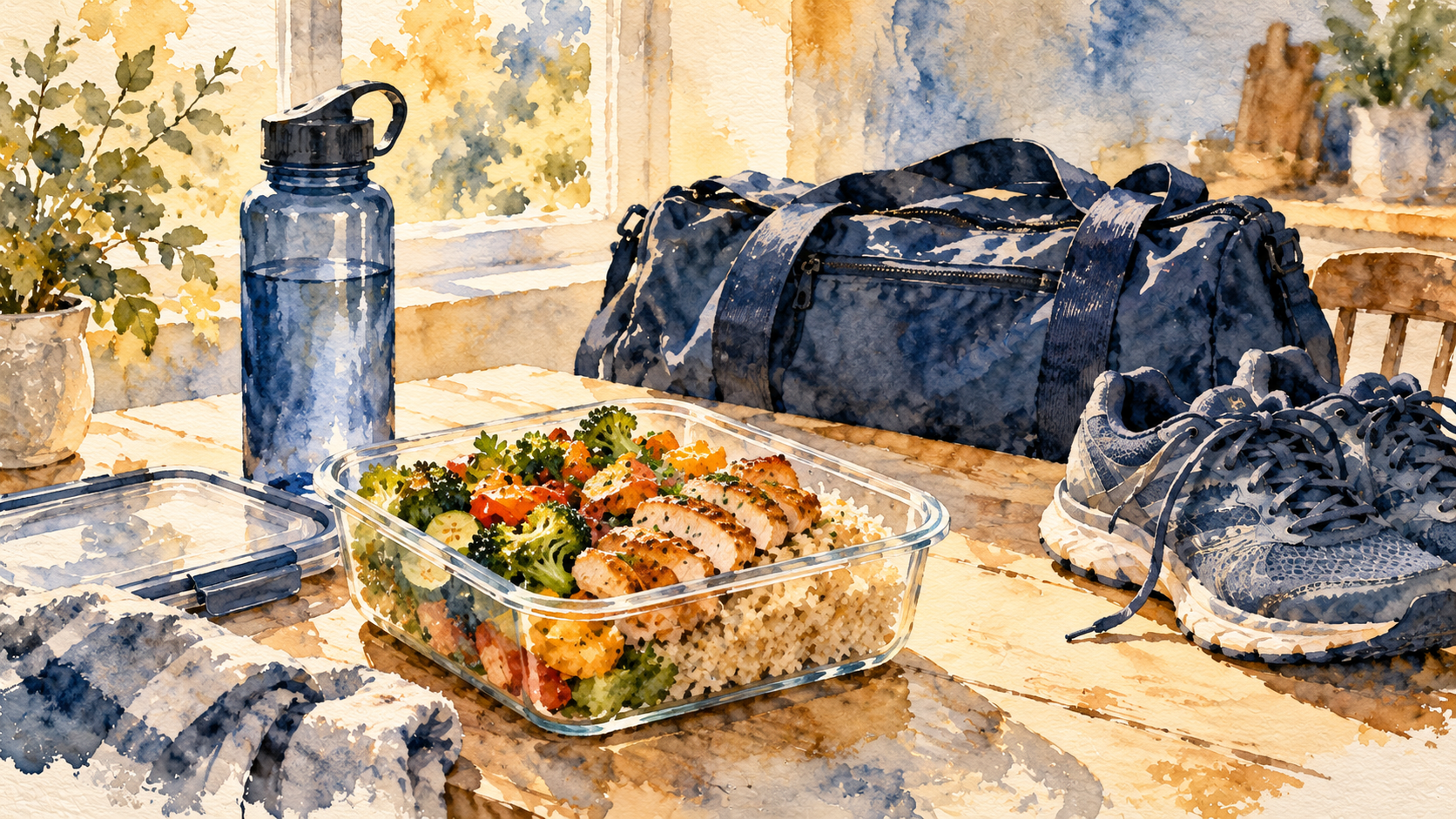
Imagine arriving at the gym with your lunch still untouched in your work bag. You remembered your shoes, your water and the session you booked—but never felt hungry enough to eat.
For an active adult taking a prescribed GLP-1 medicine, that mismatch deserves attention. Reduced appetite can be welcome. It can also make an ordinary training day harder to organize.
You want treatment to help you live better, with enough strength for the weights, energy for the run and something left afterward. That makes fueling part of the plan.
A quieter appetite is not a fueling assessment
GLP-1 medicines affect appetite and food intake. Semaglutide also delays gastric emptying, which helps explain why familiar meal sizes may feel different. Its current prescribing information lists nausea, vomiting, diarrhea and constipation among common adverse reactions.
That does not mean everyone taking one is under-fueled. Nor does it mean your previous portions are still the right portions. Needs change with body size, activity, health and treatment.
It means hunger alone cannot tell you whether the day's nutrition fits the day's demands.
A 2025 joint advisory from four professional organizations recommends nutritional assessment, attention to protein and hydration, and structured exercise during GLP-1 treatment. This is clinical guidance, not a trial proving one ideal menu for every runner or lifter.
Start with the schedule you actually have.
Give food a place beside the workout
Open tomorrow's calendar and find the workout. Now look for the meal before it. An empty space there is a useful place to start.
Choose meal opportunities that fit your workday and medication instructions. A smaller lunch you can comfortably eat is more useful than an ambitious meal you repeatedly postpone. If large portions are difficult, discuss smaller, more frequent meals with your dietitian.
A practical plan might read:
- Breakfast before the commute.
- A small lunch during the midday break.
- A familiar snack before evening training, if needed and tolerated.
- Dinner after the session.
These are planning examples, not a prescribed eating frequency. The aim is to notice where food keeps falling out of your day.
Pack a backup that fits real life: yogurt in the office fridge, a sandwich, a suitable ready-to-drink option or a small container of leftovers. The most elaborate meal plan is no help when it stays at home.
Protein matters. It is not the whole meal.
Protein supports muscle maintenance and repair. With less room for food, it helps to identify a protein source at each planned meal: eggs, fish, poultry, tofu, beans or dairy, according to your preferences and tolerance.
Agree on an individual target rather than borrowing the biggest number you see online. Body size, training, medical history and the weight used in a calculation all matter. Kidney disease or a prescribed protein restriction changes that conversation.
But meeting a protein target does not establish that total intake is adequate.
Carbohydrate supplies fuel for exercise. Fat, produce and other foods contribute nutrients a protein shake cannot cover by itself. A training meal can be protein-centered without becoming protein-only.
For the broader foundation, our GLP-1 nutrition article on protecting muscle covers daily food quality and strength work. Today's extra step is placing that food where your training day can use it.
Start with the meal that went missing
Consider this hypothetical day: you finish a small breakfast, skip lunch because you are not hungry, then arrive for an evening lifting session after hours without eating.
Before adding another recovery product, make lunch happen. That gives you a concrete gap to address without guessing what caused the difficult session.
Depending on tolerance and your care plan, that could be a smaller serving of chicken or tofu with rice, or yogurt with oats and fruit. Start with familiar foods. Avoid using the hardest session of the week to test a large, unfamiliar meal.
Use the following as a conversation starter, not a diagnosis:
| What keeps happening | A practical adjustment to discuss |
|---|---|
| Lunch disappears on busy days | Reserve a meal break and pack a manageable portion |
| A large meal feels uncomfortable before training | Try an earlier, smaller eating opportunity |
| Protein is covered but the rest of the plate keeps shrinking | Review carbohydrate, dietary variety and total intake |
| Longer sessions repeatedly feel unusually difficult | Review fueling, fluids, recovery and training load together |
| Eating or drinking remains difficult | Contact the prescribing team rather than pushing through |
One flat workout has many possible explanations. A repeated pattern is more useful information than a single disappointing session.
Keep strength in the plan
Nutrition and training do different jobs. Adequate food supports the work; resistance exercise provides a reason to retain and develop strength. Walking and aerobic activity remain valuable, but a protein drink does not replace strength training.
The evidence also argues against treating exercise as an optional accessory to medication. A 2024 follow-up of a randomized liraglutide-and-exercise trial examined adults with obesity after treatment ended. Participants previously assigned supervised exercise had more favorable weight-maintenance outcomes than those previously assigned liraglutide alone.
That study involved cycling and circuit training, had incomplete follow-up, and did not test a fueling plan for competitive athletes. It supports including exercise in long-term care; it cannot promise that a particular meal or lifting routine will prevent muscle loss.
Keep a few familiar training measures in your log: the load you use, repetitions you can complete, and how demanding the session feels. Sustained changes give your care team something more useful than “my workouts feel off.”
Give fluids a routine, too
Keep a drink available during the workday and plan access during exercise. Heat, session length, sweat losses and gastrointestinal symptoms can change what you need; a fixed bottle count is not a universal target. Follow any prescribed fluid restriction. Persistent vomiting or diarrhea is a reason to contact your care team, not simply buy a stronger electrolyte mix.
Do a three-day check-in
For three ordinary days, including a training day, record:
- Eating opportunities: What did you manage, and what disappeared?
- Training: What did you do, and how did it feel compared with usual?
- Fluids and symptoms: Was drinking manageable? Did nausea, vomiting or diarrhea interfere?
Food photos or short notes are enough to start. You do not need a perfect calorie spreadsheet. If tracking increases anxiety or restrictive behavior, use a simpler plan with professional support.
Bring the pattern to your dietitian or prescriber. Ask: “How can we support my training while keeping treatment effective and meals tolerable?”
Repeated vomiting, inability to keep fluids down, fainting or severe persistent abdominal pain needs prompt medical attention. If you also use insulin or a sulfonylurea, ask your diabetes team about exercise and low-blood-glucose precautions.
If you found this helpful check our Free Downloadable PDF on How to Eat while on GLP
References / Sources
- Nutritional priorities to support GLP-1 therapy for obesity, 2025: professional advisory on nutrition, muscle health and practical support.
- Exercise, liraglutide and weight maintenance after treatment, 2024: follow-up of a randomized trial; not an athlete meal-plan study.
- Wegovy prescribing information, revised June 2026: medication effects and relevant safety information.
The Bottom Line
A quieter appetite can change how you organize meals. It does not erase the activity you want those meals to support.
Start by putting tomorrow's food beside tomorrow's workout. Then check whether the plan is tolerable, repeatable and helping you maintain the capacity you care about.
For more practical help, get our free guide to nutrition support while taking GLP-1 medicines on the Outlast Free Guides page.
The goal is more than a smaller number. It is having enough left for the things you love doing.