
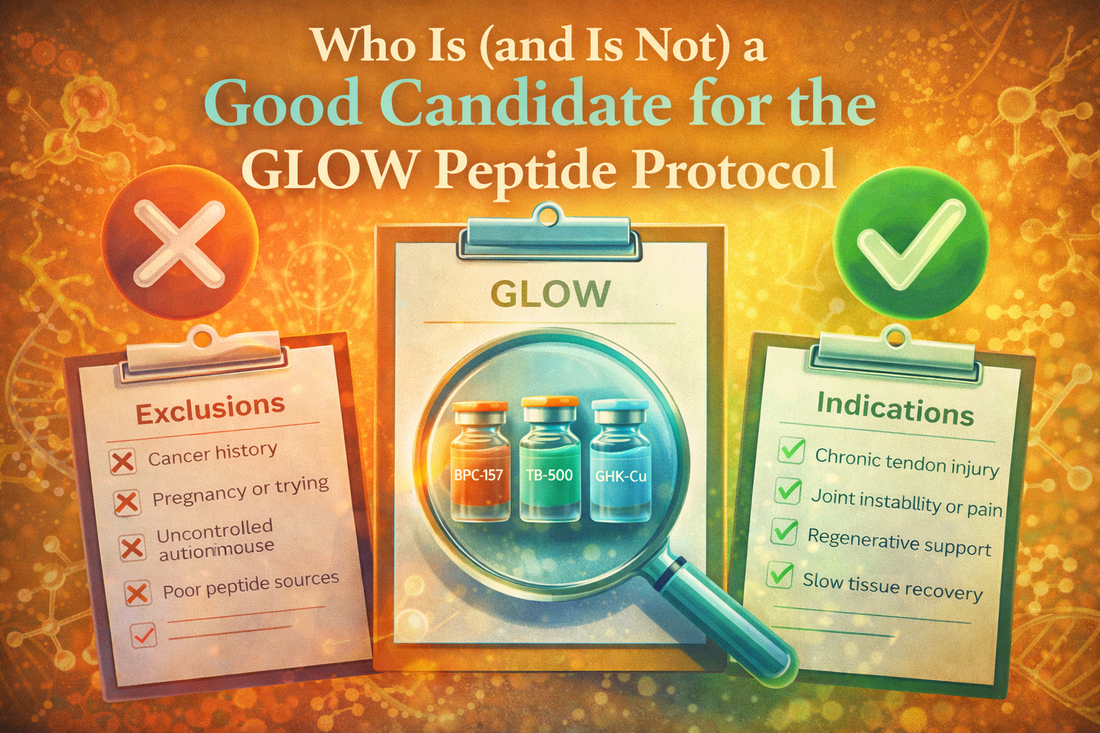
Understanding the GLOW Protocol for Tissue Healing
The GLOW Protocol represents an advanced approach to tissue healing, utilizing synergistic peptides to promote regeneration and recovery. This protocol's blend includes GHK-Cu, BPC-157, and TB-500, each contributing distinct benefits to the healing process. In this article, we explore the components of the GLOW Protocol, its dosing, reconstitution steps, and benefits based on emerging research.
GET GLOW -> WELCOME26
Components of the GLOW Blend
The GLOW blend is formulated from three potent peptides known for their regenerative properties:
- GHK-Cu (Copper Peptide): This peptide is recognized for its role in promoting collagen synthesis and providing antioxidant effects. GHK-Cu has been shown to upregulate genes that encourage tissue growth while downregulating those associated with inflammation.
- BPC-157: Known for its tissue repair capabilities, BPC-157 enhances healing processes in muscles, tendons, and bones. It works by improving microcirculation and mitigating inflammatory responses, thereby supporting recovery from various injuries.
- TB-500 (Thymosin Beta-4): TB-500 is primarily involved in promoting cell migration to injury sites, aiding in angiogenesis, and minimizing scar tissue formation. It plays a crucial role in the body's natural healing response.
By integrating these three peptides, the GLOW Protocol effectively supports and accelerates tissue healing through various biological pathways.
Dosing Schedule and Reconstitution
The standard dosing regimen for the GLOW Protocol involves daily subcutaneous injections, adhering to a structured schedule:
- Total Daily Dose: 2,330 mcg of the combined peptide blend, equating to approximately 1.7 mg of GHK-Cu, 0.33 mg of TB-500, and 0.33 mg of BPC-157.
- Duration: The protocol is to be followed for four consecutive weeks, followed by a rest period of 2 to 4 weeks to allow the body to recover and reset.
Reconstitution Steps:
- Draw 3.0 mL of sterile bacteriostatic water using a clean syringe.
- Inject the water slowly along the vial's wall to minimize foaming.
- Gently swirl or roll the vial to ensure complete dissolution.
- Label the vial with the reconstitution date and store it in the refrigerator at 2 to 8 degrees Celsius. Use within four weeks.
Storage Conditions
Maintaining the integrity of the peptides in the GLOW blend is vital for ensuring their efficacy:
- Lyophilized Vials: Store at temperatures below -20 degrees Celsius for long-term stability. If this is not feasible, refrigeration is acceptable for short durations.
- Reconstituted Solutions: Must remain refrigerated when not in use and should not be frozen. Inspect for any discoloration or cloudiness before each use.
Administration Techniques
To properly administer the GLOW protocol:
- Injection Method: Use a new, sterile insulin syringe for each injection. Inject subcutaneously at a 45 to 90-degree angle, avoiding aspiration.
- Site Rotation: Rotate injection sites systematically to prevent complications like lipohypertrophy. Suggested areas include the abdomen, thighs, and upper arms.
- Aseptic Technique: Always clean the injection site and vial stopper thoroughly before use to maintain sterilization and avoid infections.
Benefits of the GLOW Protocol
Emerging research supports the manifold benefits of the combined peptides in the GLOW Protocol:
- Accelerated Wound Healing: Studies indicate that TB-500 can significantly enhance the closure rate of chronic skin wounds. Similarly, BPC-157 has been noted for its efficacy in healing tendon, muscle, bone, and gut injuries.
- Anti-Inflammatory Effects: All three peptides exhibit properties that alleviate inflammation at injury sites, potentially reducing pain and enhancing recovery timelines.
- Improved Quality of Tissue: The combination of TB-500 and GHK-Cu contributes to proper collagen production and reduces the formation of fibrous scar tissue.
- Multi-Tissue Regeneration: The GLOW Protocol is versatile enough to address various injuries, including orthopedic conditions and dermatological applications.
Considerations and Lifestyle Factors
While the GLOW Protocol provides a robust framework for tissue healing, certain complementary strategies can enhance outcomes:
- Diet: Ensure sufficient protein intake (1.6 to 2.2 g/kg body weight) to support tissue repair and collagen synthesis.
- Exercise: Engage in progressive resistance training tailored to individual healing goals, as this promotes muscle growth and recovery.
- Sleep: Quality sleep (7 to 9 hours per night) is crucial for optimal recovery and should be a key focus during the healing process.
- Hydration and Micronutrients: Maintain hydration levels and focus on micronutrients like vitamin C, zinc, and copper, which are vital for collagen synthesis.
Conclusion
The GLOW Protocol theoretically offers a comprehensive solution for tissue healing through the synergistic effects of its peptide components. With its structured dosing schedule, proper administration techniques, and supportive lifestyle factors, the protocol is designed to optimize recovery outcomes. As with all peptide protocols, it is essential that individuals consult with healthcare professionals before beginning any new treatment regimen. This article is for educational purposed only.
References
- Pickart, L. (2018). Regenerative and Protective Actions of the GHK-Cu Peptide in Light of New Gene Data. International Journal of Molecular Sciences.
- Thymosin b4 promotes dermal healing. (2016). Vitamins & Hormones.
- Emerging Use of BPC-157 in Orthopaedic Sports Medicine: A Systematic Review. (2025). HSS Journal.